tv

Good comedy does not have to be a four-laughs-a-minute joke-fest. It can be more than that.

This post will contain spoilers for Mackenzie Crook’s beautiful Small Prophets. If you haven’t already seen it and you care about spoilers, stop right now and go watch it.

At the end of a drowsy south Manchester cul-de-sac, Michael Sleep’s life is at a standstill. It’s been at a standstill since his girlfriend, Clea, disappeared seven years ago. Michael (Pearce Quigley) works at a job he hates, which he makes tolerably by tormenting his ineffectual boss, Gordon (Mackenzie Crook), winding customers up, and constantly nipping off to his elderly father’s care home to help them sort out whatever it is that his dad’s done now.

It’s during one of these visits that his father, Brian (Michael Palin), explains that there is a way to find out what happened to Clea. A very unlikely way, but one guaranteed to give Michael the truth, if he can make it work. Over six episodes, Michael follows his father’s instructions to grow homunculi in jars of water, nurturing them until they reach a “state of divination”, at which point he can ask any question he likes and they have to tell him the truth.

Helping him, much against his wishes at first, is co-worker Kacey (Lauren Patel), whose own life has stalled. Kacey can’t move forward because her dream — acting in Neighbours — is so ridiculous that she feels embarrassed even articulating it. Her goal is so far away, both literally and metaphorically, that she can’t find a way to take the first step towards it.

Small Prophets mines the same vein that Crook explored in the wonderful Detectorists, a gentle poking about into people’s mundane lives and impossible dreams. In Detectorists, Andy (Mackenzie Crook) and Lance (Toby Jones) dream of finding a royal Saxon ship-burial on a local farm. As the series progresses, we find out that it is, indeed, there to be found, but can they? And can they beat their hated rivals, the Antiquisearchers, to the discovery and the triumph and the glory?

Also connected, in my mind at least, is The Ballad of Wallis Island, written by and staring Tim Key and Tom Basden. Another gentle look at loss and grief and friendship and the impossible necessity of learning to move on, which comes packaged as a romcom but really isn’t. Don’t get me wrong, I love a good romcom, but all the romcommy set-up turns out to be the foundations of a much deeper, more wistful and moving story.

Quigley, Key, and Jones all bring a very similar energy to their roles — men who are lost without the women that they adored, able to survive but unable to truly live, struggling to move on and find new meaning on their own. (There’s a whole digression here to be had about gender, but I’m going to resist that for now.)

But what also connects all of these productions is that they are not quick-fire comedies. They are heartwarming, cosy, moving, touching. Slow. Perhaps even ponderous. There are few belly laughs in any of them, particularly Detectorists which specialises in a more wry style of humour.

Small Prophets has some hilarious moments, but the belly laugh is not its bread and butter. The story is a blossoming flower, taking its time to reveal its inner beauty. And it really does take its time. Not to put too fine a point on it, but almost nothing happens in the entire six episodes. And some things that do happen feel like they ought to be the set-up for something else, and maybe they will be explained in the next series, but they come to nothing in this one. What, precisely is the significance of the rabbit-shaped oil slick? Is there one? Or it is just a little whimsy to be enjoyed on its own terms?

You could summarise Small Prophets in a few paragraphs and not miss any action out. Yet, if you did, you’d be missing out everything that’s important. The slow development of Michael and Kacey’s friendship — and oh, how marvellous is it to have a show that centres a friendship, not a romance! — and Michael’s dawning realisation that his father’s instructions aren’t the wild imaginings of a man losing his memory and his mind to age. These are things that need time, that can’t be hurried, and Crook’s pacing here is perfect. He does not allow the story to be rushed.

What commissioners want

Here’s the thing, though: Small Prophets, Detectorists and The Ballad of Wallis Island were all fabulously successful, but they are not what we are told commissioners want, or what comedy competitions say that they want. Rather, we are told, they are looking for scripts with what you might call a high joke density.

“Sitcom audiences will expect about 3 to 4 laugh moments per page,” said the first round of feedback I got on Fieldwork from one competition. And you will see this advice repeated ad nauseam and all over the place. More jokes. More funny. Now. Now. Now.

But if a page of script is about one minute of time, show me, right now, the “3 to 4 laugh moments” in the first minute of any of these three productions. Small Prophets has none. Detectorists may have one, depending on whether you believe “Three shotgun caps and a Blakey” is a punchline. This first minute or two of The Ballad of Wallis Island is music, and the first bit of actual comedy is physical, at about 2 to 3 minutes in.

Now look at the love that these stories have engendered. People adore them. But they’d never get made if they weren’t powered by existing talent. Yes, The Ballad of Wallis Island started off as a short film and took 18 years to develop into a movie, although most of that time was spent not actually working on the film but doing other stuff that put them in the position to then make the film.

Would Small Prophets or Detectorists have been made if they weren’t Mackenzie Crook’s projects? What kind of feedback would those scripts have had, had they been entered into any of the comedy competitions out there? “Not enough jokes. This is a sitcom!!!!!” probably. (Ask me how I know.) (No, actually, don’t.)

Cosy comedy vs “horrible people being horrible to one another”

The tradition that comedy is “horrible people being horrible to one another”, as one expert put it to me last year, is one with a long history. Hancock’s Half Hour and Steptoe & Son becomes Only Fools & Horses becomes The Office, Amandaland, Such Brave Girls. But I can’t stomach that.

I don’t go to comedy to be made to cringe, or made to feel disgust at someone’s awful behaviour. I don’t want to see someone getting away with being a dickhead. I need a haven away from that, because there’s enough of that *gestures wildly* out there already. The news is already full of it.

I want to see nice but flawed people doing their best, getting it wrong repeatedly and hilariously, but becoming a better person in the process. Ted Lasso, Schitt’s Creek, The Good Place all feature some really awful characters, but their awfulness is understandable and, most importantly, redeemed. They become better people.

The almost mortally wounded Rebecca Welton, dragged through the gutter press by her slimy ex-husband, wants to burn down Richmond AFC to spite him. But she balks at key moments, eventually learning that you can’t just fuck with innocent people’s lives and that making the club successful is the best revenge.

The entire Schitt family are entitled narcissists in the first few episodes, and I admit I struggled to keep going, but over the six season run, they all soften, become better people, learn to respect those who aren’t like them and to see that those they thought were friends are actually morally bankrupt assholes. The entire show is about lowering the barriers that being rich erects and becoming better, more grounded, kinder people in the process.

And The Good Place is about another awfully wounded woman, Eleanor Shellstrop, literally learning to become a good person. And succeeding. They all do – Chidi, Jason, Tahani, and goddamit, even the evil demons. They all learn to be better people.

Ted Lasso, Schitt’s Creek, The Good Place all have much higher joke density than Small Prophets, Detectorists and The Ballad of Wallis Island, but they all have, at their core, a belief that people are good, not horrible. People that are struggling can act out, yes, but they can also change and become a better version of themselves. Their wounds can heal. They become good, kind, selfless people.

I want comedy that is gentle, with plenty of open questions to keep our curiosity going but really only the barest hint of actual tension and absolutely zero cringe. I want comedy to be allowed to be cosy in the same way that someone being murdered by a terrible awful murderer person who is apprehended without anyone spilling a drop of tea is perfectly acceptable cosy crime. I want comedy that is allowed to unfurl at its own pace, which might be quick or might, indeed, be really quite slow.

Too many scripts

So why, then, are script competitions still banging on about 3-4 jokes per page?

I watched Not Going Out recently, having never watched it before, and I could see how poorly it was served by the intense pressure to cram as many jokes in as possible. Much of the dialogue was joke-shaped, but it wasn’t funny. I could see the set up, the reinforced pattern and the punchline — or the construct, confirm and confound as Joel Morris would put it — but it didn’t hang together properly. I was left thinking, “Oh, you expected a laugh there. OK.”

I have seen that with other shows too. A few months ago, there was some lauded adult humour cartoon thing on in the background whilst we were cooking dinner and I could hear the joke-shaped words, could catch the lingering sound of “Oh, if we just put this dialogue in here, it’ll be really funny”. Except it wasn’t. There was a hole where the funny ought to be.

I mean, Not Going Out works for enough people that it keeps getting made, and that’s fine. Not everything has to be for me. But it should be able to exist alongside other types of comedy show for people with other senses of humour. Yet I get no sense that it’s currently possible for multiple styles of humour to be served by multiple styles of show, because nothing else seems to get through to production.

The Detectorists script would be absolutely excoriated if it was entered into some of the comedy script comps that we’re all supposed to enter if we want a chance of breaking into the industry. (Top tip: It doesn’t work like that.) Small Prophets would be met with blank incomprehension.

Why?

I think there comes a point where script readers, and perhaps some writers, have just read too many scripts. They are oversaturated. It’s like semantic satiation – if you repeat a word often enough your brain stops seeing it as a word and instead it becomes a meaningless sound.

I think, after a while, if you read too many scripts then they all bleed into one giant episode of semantic satiation. Reading itself becomes a check-box exercise. Are there 3-4 jokes on page 1? Are the stakes explained immediately? Are the main characters obnoxious enough? Are they in sync wiv da yoof? Is the dialogue zippy enough? Is there a turning point on page whatever? Does stuff happen at breakneck fucking pace?

The readers aren’t reading for potential, they’re reading for familiarity. Does this thing look like all the other things we know have been successful, and therefore is more likely to also be successful? Is this the next Fleabag? Although let’s fucking face it, Fleabag is ten years old and not even Phoebe Waller-Bridge could write another one. She’s only just managed to write Tomb Raider, after six years of trying. I mean, give me $20 million and I’d hire the best writers I know and we’d give you ten things that are better than a rehash of some old game.

It’s a fucking cargo cult.

I don’t have any answers, but I do have several years worth of pent-up frustration about the mess that is the entire UK creative industries. So hey, welcome to my brain.

But

Mackenzie Crook is a fucking national treasure and I am absolutely fucking delighted that he is able to make shows like Detectorists and Small Prophets, because now other people can point to his success and say, “My work is in the same vein.” And maybe, then, someone might take find a way to take seriously the idea that comedy does not have to be a gag a minute belly-laugh-fest in order for it to work and be loved by an audience.

When someone told me that Fieldwork read “like a cross between Detectorists and The Archers”, I was absolutely delighted. I’ve struggled, since, trying to work out how to make it ‘funnier’, but Small Prophets shows me I don’t need to. I do need to make changes to the pilot, because it’s still not quite there, but I won’t be losing any sleep worrying about whether it’s funny enough or not.

Is it compelling? Do people connect with it? Does it say something people want to hear?

In an ideal world, the success of Small Prophets would encourage perhaps a broader approach to defining comedy, with perhaps a few less strictures about how many jokes over how many pages and blah-di-blah-di-blah. Maybe we might see a few more shows that have character and heart and stories that are told in the time it takes to tell them. Maybe those of us who like cosy comedy will find ourselves with more wonderful shows to watch.

Whatever happens, I do need to end by pointing out that however good it is, and it is good, Ludwig is still not a fucking comedy. It’s cosy crime. And I will not be taking questions at this time.

{ 0 comments }

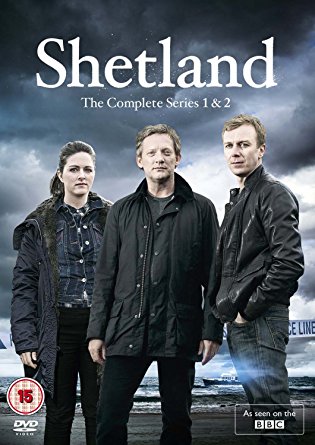
Shetland

by Suw on March 26, 2017

Warning: This post is going to be just chock full of spoilers, so if you haven’t watched all three series, go do that and then read on!

The last couple of weeks, I’ve been watching and re-watching (and re-re-watching) Shetland, the crime drama based on books by Ann Cleeves. It is a truly astonishing piece of work, and not just because of the superb acting by Douglas Henshall (as DI Jimmy Perez), Alison O’Donnell (as DC/DS Alison ‘Tosh’ MacIntosh), and the rest of the cast.

What makes Shetland amazing is the writing. Now, I’ve not read Cleeves’ books, so this isn’t going to be about how faithful or not the TV series are to the books. I’ll leave that to others. But Cleeve’s laid an impressive foundation in her books that David Kane, Gaby Chiappe, Richard Davidson, Robert Murphy and Alexandr Perrin have very skilfully built upon.

What excites me most about Shetland is that the writers (a term I’ll use now to mean both Cleeves and the scriptwriters) have worked hard to avoid both character and relationship stereotypes. Instead we get some genuinely refreshing characters and sometimes surprising relationships, which gives the show more depth and interest than you’d get from just a good plot alone. Of course, Shetland has some bloody good plots too, so they haven’t been slacking in that department.

But it’s just such a relief to watch some TV that steers clear of rehashing old tropes and instead gives us interesting people dealing with difficult situations and chewy emotions. I like that. I like being given the chance to think, being treated by a TV show as if I do, in fact, have a modicum of intelligence.

DI Jimmy Perez

Obviously, everything hinges on Henshall as Perez, the detective inspector who was born and raised on Fair Isle, lived for a while in Glasgow, and has now returned after the death of his wife to Shetland to raise his step-daughter, Cassie.

The dead wife is an old trope often used to explain a man’s motivation, and as such it can be hideously misused. Characters with dead partners are often portrayed as irreparably damaged, people who turn to drink or gambling or obsession to fill the void, whose motivations are revenge or guilt or hatred. Such writing is invariably one dimensional, reducing the dead partner (usually a woman, let’s face it) to a prop, an excuse for abnormal behaviour on the part of the hero.

But the Shetland writers avoid that cliche entirely. Perez isn’t a man tortured and unhealthily motivated by the death of his wife, he’s just a widower with a teenager to take care of, a man who’s lonely and needs to pour all his love into his step-daughter to help dull the pain of loss. Perez behaves as many of us might after the loss of a spouse. He gets on with life, maybe works a bit too hard and sleeps to little, but tries to be the best parent that he knows how to be. It’s just that every now and again he can’t help but show the pain he’s in.

Indeed, Perez is a sharp, insightful, intelligent man whose toughness, required by police work, is balanced by a gentleness frequently lacking in crime drama leads. Perez clearly cares not just about his own family, but about his colleagues, about the witnesses and the victims, and he’s not afraid to show it. Henshall deserves the Scottish BAFTA he won last year for Shetland, for the subtlety of his performance is truly a delight to watch. I particularly love the wry smile that dances around the corners of his mouth when Perez is amused, and the kindness he brings to Perez’s reactions to those he feels have been hurt or wronged. You don’t see men doing gentle often enough on TV.

Indeed, it’s rare to see a male character who can be accurately described as nurturing, but Perez very obviously is, not just towards Cassie, but also towards Tosh his detective constable (later sergeant). He is not just her boss but also her mentor, and he clearly cares about her personally as well as professionally. It’s truly lovely to see a male-female pairing with that level of connection, and with that chemistry, but without any undercurrent of romantic involvement. Indeed, as Tosh points out in one episode, that would be truly icky, on pretty much all levels.

DC/DS Alison ‘Tosh’ McIntosh

WARNING! SERIOUSLY! GIANT SPOILERS AHEAD!

O’Donnell also does a great job as Tosh, Perez’s sidekick, providing the leavening humour but without the blackness that’s too common in crime drama. Her asides aren’t born of gallows humour but something a little more relatable, and often unconnected to the case in hand. Tosh uses her humour as a way of defusing some of the tension inherent in her work, but never in a snide way.

O’Donnell was a relative unknown prior to Shetland, but you’d never think that watching her. I’m no expert when it comes to acting — I tried it once, was terrible at it, and the evidence of that is still on YouTube* if you’re that much of a masochist — but the depth she brings to Tosh becomes evident as the series progress.

Her performance in S3E5 is just breathtaking. Without going into too much depth, Tosh is kidnapped and, we eventually learn, raped. The whole episode is worthy of a blog post all on its own, because the writing is remarkable. Rape is so often used as a plot device and the impact it has on the victim and those around them often ignored. In Shetland, we see not just the aftermath of the attack for Tosh, but also how it affects her colleagues. The writers deal explore the issue with great sensitivity and sympathy, and the way that they have the other characters respond is a masterclass on how we here in the real world ought to be dealing with sexual assault and rape.

I will admit, the episode left me feeling a little shattered. It’s a powerful and affecting performance from O’Donnell, but the way that it’s written… I just wish more TV writers had that kind of empathy and understanding. I strongly believe that the way we portray the world in fiction affects the way that we shape the world in reality. We need to create a social norm where assault victims are believed by default, supported respectfully by colleagues, and responsibility for assault lies solely with the attacker. One episode of a TV show may be a small step towards creating that new norm, but it’s still an important one.

Two fathers

Another aspect of Shetland that I love is how they slowly reveal the nature of key relationships, and how some of those turn out to be very different to what one might expect.

We know that Perez’s wife and Cassie’s mother, Fran has died at some point in the not too distant past, and Perez has made the decision to move to Shetland so that he can raise Cassie on the same island as her natural father, Duncan Hunter, played brilliantly by Mark Bonnar. Hunter has re-married, but we never see his wife, Mary, and we only really find out about her later on through various asides.

Perez and Hunter, then are two fathers co-parenting a smart, capable, feisty teenage daughter. But not only do they have to negotiate their personal relationship, the fact that Hunter is a wee bit of a chancer means Perez at times has to rein him in. This creates two sources of tension within their relationship: their daughter and their professional relationship.

Shetland explores parental relationships through a very different lens than normal, through the experiences of two men dealing with aspects of parenting that are often the portrayed as the purview of women. Indeed there’s even a scene where Perez complains about how he always has to play ‘bad cop’ because of Hunter’s more laissez-faire attitude, and another where Hunter jokingly asks for a ‘divorce’. As the seasons develop, Perez and Hunter are drawn closer together as Cassie grows up and, ultimately, leaves home.

It will be interesting to see where that relationship goes, but again, it’s a joy to see a different take on something as common as parenting. I am fed up of the helpless father trope that we see so often, not just in TV drama but also in ads. How many ads for domestic wares show men as incompetent and women as being somehow being the natural cleaners, cooks and bottle washers? It’s fabulous to instead see men being shown as perfectly capable of bringing up children. There’s no learned helplessness, no appeals to female relatives to take on the burden. Hunter and Perez might struggle at times, but no more and no differently than other parents.

Why you should watch, and re-watch, Shetland

As a writer, I think there’s a huge amount to learn from Shetland. There’s certainly a huge amount more to write about it, though I’m well over 1,600 words already.

But the more I watch, and re-watch (I’ve seen S1 four times in the last, um, ten days, and S2 twice), the more nuance I spot, the more depth. It makes me think hard about how we portray relationships, and why we need to reach beyond what is obvious and explore what is at once both unusual and yet so very normal.

Having two fathers bringing up a daughter is unusual, but yet the father-daughter relationship is very normal. Having a young woman being fast-tracked through the police may well be unusual (hopefully less so these days), but having a mentor/mentee relationship with your boss is very normal. We don’t need to rely on tropes when there’s so much richness in the wide variation of our experiences of “normal”.

And that is something I have found truly inspiring. Regular readers (all three of you) will know I am sporadic at best when it comes to writing, but Shetland has galvanised me in a way I’ve not felt for a long time. I hate talking about works in progress, but I’ve had a concept gnawing away at me for the last 18 months that I’m now actually, properly working on, rather than just mulling over as I fall asleep. I feel viscerally excited by the idea of putting pen to paper again. What with Ada Lovelace Day taking up my of my mental bandwidth, it has been difficult to carve out the time to allow myself to be creative — which is really what Creative 17 was/is all about. So, maybe Shetland has affected me so deeply because in it I see the kind of work I want to produce (though I’m not a crime writer).

Whatever it is that has connected with me, I’m waiting on tenterhooks now for S4.

* You’ll never find it.

{ Comments on this entry are closed }
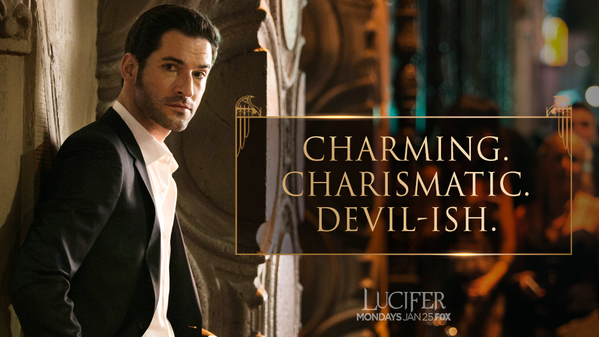
Lucifer charming

It seems I can only be prompted to blog during bouts of strong emotion these days, writing in midst of white hot anger, extreme smug or, in this case, intense over-excitement. Maybe it’s because, after 14 years, the dynamic of blogging has radically changed, moving from the urgent confessional towards a more self-conscious performance. (Or maybe I’m spending too much time on Twitter, which is performative in the same way that theatre must be, with immediate gratification/mortification; blogging is more like a movie or TV show, requiring rather more of our limited stock of patience than perhaps we wish to give.)

Anyway.

Lucifer.

I knew from the moment I saw the first trail for Lucifer that it would be My Sort Of Thing. I didn’t realise for the first couple of episodes that it is loosely based on Neil Gaiman’s Lucifer from The Sandman, but for various reasons which will become eminently clear at some point in the next few weeks, or months, I’ve been a little distracted lately and had not been paying attention. Tsk tsk. Always said I was bad at being a fan.

If you’re a better fan than me, and are familiar with Lucifer from the work of either Gaiman or the wonderful Mike Carey who wrote the spin-off comic, I’d advise that you put that out of your mind right now. Lucifer the TV show takes Lucifer the character, and his backstory, and does something very different, but just as good, with him.

Lucifer (Tom Ellis) has grown bored of Hell, has shut up shop and moved to LA where he’s spent the last five years running a nightclub and charming the pants off anyone who stops moving long enough. When Delilah, a singer whose career Lucifer ‘helped along’ is shot dead, he cannot help but get involved in the hunt for the real killer. Enter Chloe Decker (Lauren German), detective with the LAPD, who is peculiarly immune to Lucifer’s ’superpower’, his ability to extract from people an admission of their deepest, darkest secrets. And so we end up with the unlikely team of Lucifer Morningstar and Detective Chloe Decker, fighting crime on LA’s lawless streets… Except not.

In the same way that it is unhelpful to think of Lucifer as a comic book adaptation, it’s also unhelpful to slot it into the supernatural police procedural genre. It’s not CSI or NCIS or The Bill or New Tricks (yes, yes, I’ve been trawling Hulu for old British TV shows, what of it?) with added Satan. Whilst there is a crime of the week, they’re really just a backdrop, the scenery against which we see a far more interesting narrative play out.

If anything, Lucifer has more in common with Sleepy Hollow than any of the million or so police procedurals that have graced our screens. Like Sleepy Hollow, Lucifer features a character dislocated from his normal reality and is paired with a modern cop who is dealing with their own problems and who also serves to ground not just both characters but also the show.

Ichabod Crane (Tom Mison) is a man out of time who has to not only adapt to an era radically different from his own, he also has to protect himself, Lieutenant Abbie Mills (Nicole Beharie) and their extended family/team from supernatural evil. Lucifer is, well, the Devil, a fallen angel who’s trying to adapt to this messy, weird, very human world that he now inhabits. He’s not supposed to be adapting, he’s not supposed to change at all. He’s supposed to be emotionless and unsentimental but instead he finds himself having these… these feelings… which he can neither explain nor understand but which he yet finds fascinating. Lucifer is a lot less interested in protecting others, even if he does find himself intervening when perhaps he ought not, so the dynamic isn’t entirely parallel to Sleepy Hollow, but the overall structure is similar.

Co-incidentally, both Lucifer and Sleepy Hollow feature a white British male actor called Tom playing the ‘out of time/place’ character. (They also share an executive producer, Len Wiseman.) As a Brit living in the wilds of Wisconsin, perhaps this idea of the dislocated Brit dealing with all the strangeness of a different culture resonates particularly strongly with me. I particularly look forward to the episodes where Lucifer and Crane try to order a glass of water in a restaurant only to find themselves deemed entirely unintelligible. Now there’s a crossover to boggle the mind.

!! (Minor?) SPOILERS !!

As I said, Lucifer is only vaguely a procedural, not least because Mr Morningstar himself isn’t hugely interested in these crimes, unless he’s getting something out of it himself. In the first episode, Pilot, he’s interested in Delilah’s death because he was responsible for her having a music career in the first place. After that, the crimes are, for him, either a mechanism that allows him to get closer to Decker, who intrigues him, or an opportunity to play with his own (im)morality. But by S01E06, Favourite Son, the novelty has worn off and Lucifer walks away from the crime scene because the murder of a security guard and theft of a shipping container is “boring”. It’s only when he finds out that it’s his shipping container that’s been nicked that he engages.

Lucifer’s real interest lies not in solving crimes, but in understanding humans and their emotions, finding out why Decker is immune to his charms and, as the series progresses, understanding what it is to become (more) mortal. Having never had to deal with humans in their natural habitat before, he finds that perhaps they are a bit more complicated than he had been lead to believe, and he the ambiguity is irresistible.

This is, imho, one of the major strengths of the show. Most TV series or movies that tackle human nature head-on suffer from hideous interminability. There is nothing, to borrow Lucifer’s word, more “boring” than a worthy exploration of the human condition. The best way to tackle such introspection in popular culture is obliquely, through the medium of humour. We can take a sneak peak at our humanity through the lens of the Devil, and if we’re smart we can learn something about ourselves as we laugh.

This question of identity is a crucial one to every human who’s awake and paying attention. It’s certainly an important one for me. Having had what one might call a ‘non-standard career’, I can feel some of Lucifer’s pain. Who are we, really? Are we here for a reason, or do we just blunder through life and hope for the best? Does our work shape the person we become? Or does our nature draw us to certain types of work?

Lucifer’s own sense of identity is in crisis. He feels a deep-seated contradiction between his role as the Father of Lies and the fact that he is himself truthful and honourable, for certain definitions of truthful and honourable. His ability to draw the truth out of other people is mirrored by the fact that he never actually lies, though his truths often sound so ludicrous they are ignored. And, as he says, his word is his bond; Lucifer always upholds his end of a bargain. How can he, or we, square this with Satan’s reputation for deceit, manipulation and trickery?

And there are more wrinkles: How can he, or we, ignore the fact that his honour is not a little besmirched by the fact that he tells people that if they want something, they should take it. He might argue that ultimately the people he manipulates make their own decisions, but we can’t ignore the fact that he still encourages transgression.

“So the Devil made you do it, did he?” Lucifer asks Delilah. “The alcohol and the drugs and the topless selfies. The choices are on you, my dear.” But time and again, we see him nudging people towards choices they might not otherwise have taken.

These conflicts, between Lucifer’s conception of himself as truthful and honourable and both his actions and reputation, are at the heart of the sub-plot that explores Lucifer’s damaged relationship with his dad. After all, Lucifer Morningstar was once called Samael and was the favourite son of God, the most beautiful of all the angels. But, being a tad feisty, he rebelled some 3 seconds after the moment of Creation and was cast out of Heaven to become the Lord of Hell. But, as he says, was he made Lord of Hell because he was inherently evil, or is he a good person doing the job his father commanded him to do?

From this springs Lucifer’s second rebellion, his closing up of Hell and relocation to LA. He turns his back on his father, dismissing God’s demand, delivered by the angel Amenadiel (DB Woodside), and the pleas of the demon Mazikeen (Lesley-Ann Brandt ) that he return to Hell. And thus we have another story strand, that of Amenadiel’s and Maze’s attempt to persuade Lucifer to resume his duties. In, Pilot, Amenadiel asks what has become of the tortured souls and demons that Lucifer should be looking after? That question, so far, has not been answered. I was half-expecting to see more in the way of supernatural crime as the damned and the demons run riot. I’m actually glad that’s not the case, because Lucifer’s personal journey is far, far more interesting.

Of course, Lucifer isn’t the only person with issues. Decker has a broken marriage and is ostracised at work for daring to think that perhaps a fellow cop, now deceased, wasn’t squeaky clean. “Palmetto Street” keeps coming up as a major turning point for her, and an unresolved issue she can’t keep from revisiting.

One of the things I really love about Lucifer is that Decker’s relationship with her ex-husband, Dan, isn’t black and white. Whilst Lucifer himself refers to him as “Detective Douche”, and it’s easy to agree with that summation in early episodes during which Dan is at risk of being a cartoon of a character, by Favourite Son, he’s beginning to be a real, fleshed-out person. He doesn’t just have feelings, he has complexity, he has virtues and vulnerabilities, and he’s likeable. Maybe Chloe and Dan’s relationship is actually meant to be, maybe it’s worth saving.

This kind of character arc is not an uncommon one, but in Lucifer it’s essential. How tedious would it be if Detective Douche was actually a douche, if Lucifer really was the best man in Decker’s life? Not only would that be trite, it would be a disaster for Decker. Lucifer describes himself as “like walking heroin: very habit forming. It never ends well.” And you know that if Decker got involved with Lucifer it would indeed end badly, and she’s far too good of a person for that.

So often, buddy set-ups are predicated on romantic love between the leads, or some kinda of platonic bro-love if it’s two men. (When the leads are two women, it’s usually hatred morphing into basic platonic friendship, cf The Heat, because heaven forfend two women have any kind of love for each other.) And whilst Lucifer is desperate to provoke an amorous response from Decker, she is entirely disinterested in him, which makes their relationship both more credible and more satisfying. Instead, the romantic focus is on the estranged husband and wife, and it’s done with nuance and complexity, things of which I am a huge fan.

Lauren German is fantastic as Decker, with that perfect mix of suspicion and level-headedness that makes the whole show work. Without German, Lucifer would feel like nothing more than a vehicle for Ellis’s very obvious charms, but she brings an everywoman vibe to her performance that allows us to relate to her. Decker got where she is by being tough and determined, and not taking any shit from anyone, lease of all some weird bloke who says he’s the Devil. She is exactly the person that Lucifer needs, and German does her brilliantly. I love her to bits.

Tom Ellis is equally well cast. He has the insouciance, the accent, the eyebrows for the job, and his interpretation of Lucifer as the bastard child of “Noel Coward and Mick Jagger” is perfect. Of course Lucifer’s going to be cocky — he can’t be killed because he’s immortal. Of course he’s going to have swagger — women are irresistibly drawn to him (as might also be some men, as we find out in one scene). But where Ellis really excels is in portraying uncertainty, those moments when Lucifer really isn’t sure what the fuck is going on, and doesn’t quite know what is happening to him. It would be easy to overdo Lucifer, but Ellis is at his best when he’s reining it in, those moments of barely controlled rage, or the intense perplexity when Decker doesn’t behave the way he’s expecting.

If you haven’t seen Lucifer, then I recommend binge-watching as soon as you feasibly can. Watching the episodes back to back is hugely satisfying, not least because each episode is fresh in your mind so you pick up on the smaller details that you might miss if you waited a week in-between. And, of course, if you haven’t seen Sleepy Hollow yet, you seriously need to binge on that, too. All of it. Right now.

{ Comments on this entry are closed }
We need a female Dr Who

by Suw on March 30, 2013

We need a female Dr Who. We also need women writing Dr Who. I was quite shocked to read in an excellent piece by Mathilda Gregory that the last episode of Dr Who written by a woman was in 2008. Said Gregory: 

[S]eason seven of Doctor Who will feature no female scribes at all. Not in the bombastic dinosaurs and cowboys episodes that aired last year, and not in any of the new episodes we’re about to receive. In fact, Doctor Who hasn’t aired an episode written by a woman since 2008, 60 episodes ago. There hasn’t been a single female-penned episode in the Moffat era, and in all the time since the show was rebooted in 2005 only one, Helen Raynor, has ever written for the show.

In my opinion, it shows. Whilst some episodes Dr Who are amazing examples of storytelling, some are really quite dreadful, bad ideas that are emotionally flat with little complexity or depth. I think this comes, at least in part, from a lack of diversity on the writing team. Homogenous groups only too easy go along with each other’s ideas, even bad ones, because they lack dissenting voices. The best way to diversify your ideas is to diversify the group of people having them. Which doesn’t just mean having women in your writing team, of course, but looking at all other areas of diversity. 

But whilst having some female writers on the Dr Who team would be a great step forward, an even bigger, better step forward would be to make Dr Who a woman. Not just for a novelty episode, but for several series, just like any other Dr Who actor. 

With Ada Lovelace Day, we focus on the importance of role models to women and girls, and work towards raising the profile of women in science, technology, engineering and maths (and other related fields). We do this because women’s achievements and contributions often go unrecognised, and the women themselves are often sidelined in favour of their male colleagues. By pointing out women’s achievements, we hope to slowly build new role models from whom girls and women can draw inspiration. 

One area that’s just as important but less easy to address is the role of women in fiction. As a teen, I was absolutely entranced by the novels of Anne McCaffrey not least because the vast majority of them featured strong female leads. These fictional women were people I could relate to, that I wanted to be. It’s much, much easier to be inspired by someone of your own gender, because you can more easily imagine yourself as them. And research has shown that female role models are important to women, more so than male role models are to men. 

Dr Who is one of the most important science fiction shows on TV in the UK, and yet the lead role is always a male. Females are always companions or tertiary characters there to advance the story. Whilst many of the Drs companions are very strong, intelligent women, they are still secondary characters. The message they give girls and women is that it doesn’t matter how smart, strong, or independent you are, there’ll always be a man in charge. 

It’s about time that the Dr Who team took the bull by the horns and cast a woman as Dr Who. Preferably a woman who’s got the experience to show the Doctor as the complex emotional creature we know her to be. And preferably this female doctor would be written by a team that includes a couple of women as permanent members, rather than having the occasionally female-penned script thrown in every now and again. 

I’m very obviously not the first to think about Dr Who in these terms. Indeed, I had a great conversation with some women scientists recently where we were wondering who we would have to lobby to get a female in the lead role. And in a rather wonderful piece, Alasdair Stuart runs us through an alternative history of Dr Who, reflecting on who might have played her if she’d started off as a woman. 

Having a female Dr Who, well co-written with female scriptwriters, would be utterly fantastic. It would provide a strong female role model for girls, it would provide a great opportunity to explore some complex themes around identity – something that Dr Who has done so well in the past – and it would be a great watch for us women who are so fed up of seeing a male world reflected to us as if we don’t exist. 

So come on, BBC, get your act together. More female writers and a female lead is exactly what the Doctor ordered. 

{ Comments on this entry are closed }

(Cross-posted from Kits and Mortar.)

Ever thought about converting a chapel into a cosy little house? Or driven past a derelict barn and wished you could renovate it? Have you taken the plunge and bought a chicken shed that’s just oozing potential? And are you going to do something green with it?

Well, I had a call from a lovely chap called Greg Goff at Twofour Broadcast this morning who’s looking for an eco-rennovation project to film for a new series called House Wrecks to Riches. The team are currently filming a number of builds, including a warehouse, a windmill, a milking parlour and a lighthouse, and Greg is really keen to find a green project that they can add to their list.

The programme will follow a project from the very beginning, so you should have planning permission and be ready to rock and roll, but not have quite started yet. The production team will then come and have a look round the existing building and talk to you about what you’re going to do with it. They’ll then film through until the end of the year, which will hopefully be enough time for you to reach completion!

Your project doesn’t have to be huge, it just has to be green – and part of the interest will be in seeing how you interpret the idea of ‘environmentally friendly’. One thing I’ve learnt in the short time Kits and Mortar has been around is that ‘green’ definitely means different things to different people. The key thing is that green is at the centre of your build. That might mean a reed bed water filtration system, or straw bale building, or turf roofs, or using any other green technique or material.

It also doesn’t matter what you’re intending to do with the finished property, whether you move in to it as your primary family home, sell it on at a profit, or run it as a holiday let. The build can be almost anywhere – Twofour Broadcast are based in Plymouth, so most of England and Wales is within easy reach – and they are following projects on Anglesey, Essex and Cornwall

The programme is going to be presented by Gary McCausland from How to be a Property Developer and Zilpah Hartley from A Place in the Sun.

If you have such a build in mind, and you’re ready to take the plunge, get in touch directly with Greg Goff by email, or phone his direct line: 01752 727528.

There was one closing quote in the blurb Greg emailed me yesterday: “The UK needs 250,000 new homes built every year to keep up with demand. Each year we’re 100,000 short of the target… but there are 750,000 empty properties out there to be renovated.” Makes you think, doesn’t it?

{ Comments on this entry are closed }

A tangle with gravity

by Suw on January 30, 2008

I wrote this post yesterday afternoon with the intention of posting it on Strange Attractor, but technical problems have stopped me from being able to post it there at all. Horizon was, by the way, fab.

Whilst Kev and I were at the gym this morning, we caught an interview with Dr Brian Cox on BBC Breakfast, talking to Bill Turnbull and Sian Williams about an episode of Horizon, What on Earth is wrong with gravity. I’m looking forward to seeing the programme tonight, having already seen a number of outtakes on Brian’s partner Gia’s blog. Thankfully, Gia has grabbed the interview and put it up on YouTube:

Now, gravity is tricky. It’s the sort of thing, like mass, that seem pretty obvious. You drop a pencil, as Bill did, and it falls until it hits a surface that stops it falling any further. We all know what gravity does. What’s less clear is what gravity is, how it works, what makes gravity pull things together. It’s actually a pretty difficult subject to tackle in a six minute segment.

Unfortunately, Bill and Sian – and whomever produced and researched the program – didn’t prepare any decent questions. Gravity is one of those subjects where seemingly simple questions have horrendously complex answers, if they have answers at all. Bill and Sian went for the simple questions, but Brian had only a few minutes – if that, given that they showed two clips of the programme – to try to answer.

Now, to my mind, the job of the presenter in these situations is to act as a proxy for the audience and to ask the questions that the audience want answered. The question that I suspect the audience most want answered about an episode of Horizon is: “Why should I watch this programme?” That was a question that Bill and Sian spectacularly failed to address, even indirectly, because they were focused on small but unanswerable questions instead.

Bill concentrated on dropping his pencil and asking querulously, “Why is it so complicated?” and then giggling like a schoolboy, I suspect because he felt a little out of his element. “I thought it was dead simple myself,” he says.

Brian has some great stories to illustrate his point. Most surprisingly, he talks about how if we didn’t correct for the way that time passes differently in orbit to on earth, our satnav systems would drift by 11km per day. But he’s forced to talk about spacetime without being able to fully explain what spacetime is and, frankly, anyone would be forgiven for struggling with that.

Sian then says, “I’m still not sure what causes gravity.” Well, you and the rest of the physics world. That’s not a smart question to ask, because there’s no answer, and the lack of an answer is going to flummox people. The point of this six minute segment is not to solve one of the universe’s greatest riddles, but to spark a little curiosity in people’s minds. And I can pretty much guarantee that no one woke up this morning and asked, “What causes gravity?”

Indeed, I did a straw poll of my friend son Twitter and Seesmic, and asked, “If I was an omniscient being, what scientific question would you like answered?”

From Twitter:

jrnoded: @suw why 42?
michaelocc: @Suw Is faster than light travel possible?
adamamyl: @Suw: why, on taking government office do incumbents forget they have principles/spines? Or, why int a resignation, a resignation, thesedays
zeroinfluencer: @Suw: How to make an affordable Holy Grail (Assorted Colours)
londonfilmgeek: @Suw Can i haz an Aperture Science Portal gun, kthanxbai
The_Shed: @Suw Are we even close to knowing the truth about anything?
johnbreslin: @Suw: Is this like “does anything eat wasps?” 🙂 how about, where does all the time go (inspired by the Time Snails in “Captain Bluebear”)?
aidg: @Suw Science q for the omniscient: How the universe was created or the story of creation from primordial soup to multicellular organisms.
meriwilliams: @Suw Why is life?
tara_kelly: @Suw Dear omniscient being: is time really as linear as we like to think it is?

From Seesmic, my question:

An amazing question from DeekDeekster, that I personally would love the answer to:

Jeff Hinz echoes MichaelOOC, but from the opposite angle:

Christian Payne takes the Prince Charles line:

Dave Shannon asks the hardest question:

You’ll notice that no one, not one single person, asked “What is gravity?”.

Then towards the end of the Breakfast interview, they bring up the entirely spurious issue of the asteroid that missed hitting the Earth by 334,000 miles at 8;33am this morning. Cue the stupidest question of the morning: “If gravity is such a big deal, how come that asteroid that Carol told us about didn’t crash into Earth?” That’s like saying, if the sky is blue, how come grass is green?

To add insult to injury, Sian ends up by saying, “See, that’s why he has a PhD and we haven’t, because he can understand these sorts of things and we’re still bamboozled” and Bill finishes up with, “You’d managed a major achievement this morning, which is that you’ve managed to explain something to all of us and made us both feel really thick.”

Poor Brian didn’t stand a chance. How can you manage to extract even a shred of dignity from that? How can you pull back from that and say something that will encourage people to watch your programme?

If the Breakfast team had thought for a moment and actually talked to Brian before the interview about what questions would make for an entertaining and interesting interview, ruling out questions that no physicist alive can answer, and including ones that perhaps the audience actually want to know the answer to, then I suspect things would have gone much better.

But to me, this is indicative of the attitude of the media towards science and technology: “Oh, look at those weirdos over there with their white coats and strange ways of talking. They’re not like us. They’re Boffins.” It’s an attitude based in ignorance and fear, and nurtured by the unnecessarily divisive split between science/tech and the humanities at school and then university.

Yet at times like this, the “I’m too dumb to understand you boffins” attitude is counterproductive. All Bill and Sian have done is put off people who might otherwise have watched Horizon, and pissed off the people who definitely will. Which is foolish, given that they are working for the very same organisation that commissioned Brian’s programme.

{ Comments on this entry are closed }

Get well soon Hamster

by Suw on September 22, 2006

Richard Hammond, one of my favourite TV presenters responsible for making Brainiac and Top Gear such compelling viewing. I mean, I don't drive, and all I know about cars is that they have a wheel at each corner and go 'vrrooom' … why would I want to watch a programme about cars? But Richard, known affectionately as the Hamster, just made things so entertaining I started to think that maybe I might want drive myself again one day.
Time Commanders Hammond
So I was very concerned to hear yesterday that the daft git had managed to crash the Vampire jet car at 300mph and was in hospital in a critical condition. His condition's stable now, and it appears he's improving, which is all good news, although no one will know how serious his brain injury is for a while yet.
I know there are thousands of fans out there who feel the same way I do, and they've come out en masse to do something about it. The people at Pistonheads.com have set up a page on JustGiving.com to collect donations for the Yorkshire Air Ambulance, who flew Hamster to Leeds General Infirmary. Initially they wanted to raise the £340 that that single flight, but the last time I looked there were up to £36,895, and it's going up by about a £1000 every half hour as the network effect takes over. It's wonderful to watch.
So get well soon, Hamster. Looking forward to seeing you back behind the wheel and givin' it some attitude.

{ Comments on this entry are closed }

Neat

by Suw on May 15, 2006

I love ads that riff off other ads. This one is just ace. (Thanks Kevin!)

{ Comments on this entry are closed }
Office policy

by Suw on April 17, 2006

Not really all that work safe at all, I'm afraid, but very funny. (Thanks KM.)

{ Comments on this entry are closed }

Bloggers on telly

by Suw on January 13, 2006

Last time I saw one of my friends on TV, it all turned out to be a wee fib. This time round… the evidence is incontrovertible. And on Flickr.
Someone must have video, surely?
But wow! Our own Tom on telly. Whatever next? (*cough*me?*cough*)

{ Comments on this entry are closed }

We have a voice and it's time we made ourselves heard

July 2, 2005

Whilst I was in San Francisco, I had the opportunity to work on the Technorati Live 8 site. It was a concatenation of lucky events that led me to being involved, but I feel proud to have had that chance. The Technorati Live 8 site gives all bloggers a single point of reference to find […]

Read the full article →

Dr Who is such a tart!

May 30, 2005

Just watched last night's Dr Who and I have to agree with Tom that not only is Dr Who is a bit of a tart, but he's also a bit free and easy with gender/species/group sex distinctions. Good for him, I say. Bit jealous really. I never get to dance, let alone set up an […]

Read the full article →

Edge of Darkness, episode 1 at last

May 14, 2005

It was nearly two years ago now that I sat in my lounge in Reading, watching Edge of Darkness on BBC4. That time round I missed the first episode. Tonight I saw it. Twenty years is no time at all. Two years is but a blink.

Read the full article →

Bad Wolf

May 9, 2005

Who's afraid of the Big Bad Wolf? I think Dr Who will require repeat viewing now.

Read the full article →

Dw i eisiau Sky+

May 9, 2005

Llynedd, pan o'n i'n byw yn fflat fy ffrind Svet, des i arfer i ddefnyddio Sky+ i recordio'r teledu. Mae'n fendigedig – ti'n jyst setio'r peth i recordio rhaglen neu holl gyfres, ac mae yn. Jyst fel 'na. Dim ffys. Dim problem. Gwylies i fwy o deledu Cymraeg wedyn na'r holl flwyddyn o'r blaen, jyst […]

Read the full article →