QotM

Until the end of the 19th Century, the faerie and human realms overlapped quite considerably. The soft places, where the skilled can walk two paths at once, were once common. Clearings in the woods, hilltop earthworks, faerie rings and even the bottoms of gardens hid gateways to the Summer Lands through which faeries came and went quite freely. Such effortless access meant that human children could be easily replaced with faerie changelings and human adults lured or tricked into crossing the border into Faerie, mostly never to return. (Those who did came back… changed. Just look at Byron.)

But in 1867, Lucien B. Smith of Kent, Ohio in America was granted a patent on his invention of barbed wire and, in helping farmers around the world parcel up their land, so Smith cut the faeries off from the human world. As the barbed wire went up across the country, the faeries found their way blocked. The glades where they would slip from world to world were now surrounded by strands of galvanised steel that formed a barrier as impenetrable as a curtain of fire. As every child knows, faeries cannot abide the touch of iron and what is steel but iron with bits in?

The invention of the barbed wire fence did more to divide humans from faeries than any other single invention in history. And because we barely knew the faeries were there, they fell into myth and legend, their visits to our world put down as hoaxes or the tales of the over-imaginative, stories told to children to make them behave.

And over the last century or so, of course, us humans have become less and less likely to go a-wandering, less likely to stumble into those few remaining soft places and there lose our way. We might go walking up that hill, but never cross the barbed wire fence that keeps us out of the ancient tree-ringed circle at the top. We might wander through the woods but never leave the path to sit and daydream in that sun-dappled dell.

There are a few places where the Summer Lands still intrude upon our world. Little enclaves of the faeries’ world overlain on our own, where the link betwixt is strong enough to survive the encroachment of modern living. Places where the faeries are bounded on our side by iron, but where the the path to their lands can still be walked by those who know how.

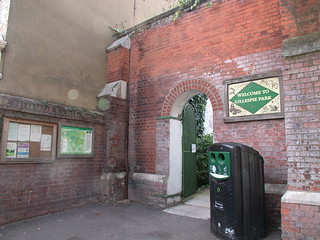
We must be careful in these soft places. The faeries are quite capable of walking amongst us entirely unseen. A simple glamour can make us think that they are human or, indeed, that they aren’t there at all. And in the crush of city life, do we pay attention to the tall, beautiful lady in the park, sitting on the oak bench and watching our comings and goings? And when she offers us a buttercup, we should stay the hand that wants so much to betray us by automatically accepting. With faeries, a gift is never just a gift.

Support Queen of the May, a story about faeries, botany and the scientific method, on Kickstarter now!

{ 0 comments }

At last, Queen of the May is up on Kickstarter and ready your support! We have 31 days to raise $10,000, and already have $1071 pledged. Even if you choose the lowest support level, which is $3, please do consider taking part as every little helps!

You can also help immensely by telling your friends about it. No matter how focused your own personal network, every mention of the project helps. Here are a few things you can do:

Use your social networks
Send a Tweet, update your Facebook, MySpace and LinkedIn statuses, or leave a message on any other social network you use. Kickstarter provide a Tweet button that allows you to log in to Twitter and send a pre-written Tweet which says:

Queen of the May by Suw Charman-Anderson — Kickstarter http://kck.st/zv4p1f via @kickstarter

If you think that’s a bit boring, you can always try:

I’m supporting @Suw’s Queen of the May on @kickstarter and you should too! http://kck.st/zv4p1f (please RT!)

Or, of course, you can write whatever you like, just remember the URL: http://kck.st/zv4p1f

Kickstarter also has a Facebook Like button, which you can use to post to your Facebook timeline, but again, an original, personalised message will be more interesting to your friends. 

Write a blog post
If you want to write a blog post about the project, you can quote any of the stuff that I’ve written on the Kickstarter page or here to be part of your post. You can also embed the video if you like. The code is:

<iframe frameborder=”0″ height=”360px” src=”http://www.kickstarter.com/projects/suw/queen-of-the-may/widget/video.html” width=”480px”></iframe>

If you want to ask me specific questions or do an interview, please feel free to email me.

Tell your friends
If you have friends that you think might enjoy Queen of the May, why not just send them a quick email to tell them about it? Equally, if you’re on any mailing lists, forums etc. and feel like they might like to know about it, please do let them know. 

Share the link
If you’re a member of social sharing sites like Delicious, Pinterest, Metafilter, StumbleUpon etc. please do share a link to the Kickstarter project page. The biggest challenge for any crowdfunded project is to reach enough people and social sharing sites can be important sources of new supporters.

Every little really does help
It’s tempting to think that you have to famous to have an effect, but that’s not true and there’s evidence to prove it! Buzzfeed’s Jack Krawczyk and StumbleUpon’s Jon Steinberg recently collaborated on a project to analyse how links were shared across their networks. They said:

Our data show that online sharing, even at viral scale, takes place through many small groups, not via the single status post or tweet of a few influencers. While influential people may be able to reach a wide audience, their impact is short-lived. Content goes viral when it spreads beyond a particular sphere of influence and spreads across the social web via ordinarily people sharing with their friends.

[...] Even the largest stories on Facebook are the product of lots of intimate sharing — not one person sharing and hundreds of thousands of people clicking.

In short, lots of people sharing the link with just a few good friends is at the heart of what makes a project like this succeed, however counter-intuitive that might seem. I’ll write more about this in due course.

In the meantime, if you like the look of Queen of the May, do keep an eye out for updates from me on Twitter, as well as here on the blog and on Kickstarter. And here, for your delectation is the pitch video. Enjoy!


{ 0 comments }

Do faeries have sex?

by Suw on February 13, 2012

WARNING! This post might contain spoilers for my next novelette… or it might not. I’m not sure yet. But if you’re spoiler-sensitive, you might want to look away now.

Queen of the May is the story of a young woman stolen away by faeries who has to find her way back to the human world. I can’t say I was thinking I’d be writing faerie stories, but here we are with a fully fledged faerie realm and an unwilling human abductee who has to work out from first principles how the faerie magic works and how to use it to get home.

Of course, if I want my heroine to make sound, reasoned decisions based on the information she has available to her, I need to know just how the faerie realm works. And this is where the questions start.

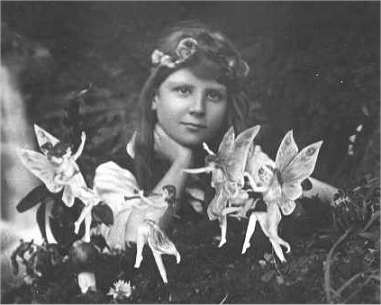
Firstly, what species of faerie are we talking about? The dainty, winged Cottingley Fairies? The beautiful and fair-haired Tylwyth Teg of Wales? The human-sized, malicious elves of Pratchett’s Lords & Ladies who live in Fairyland? (Which then raises the question of whether elves are a subspecies of fairy?) Shakespeare’s meddling and incompetent Oberon? Any one of dozens of other species? Or even an entirely new fae species previously and heretofore unknown to man?

Once we’ve established the species, which is not necessarily easy, that raises even more questions.

  • How does faerie magic work?
  • What happens if faeries use too much magic?
  • How does time pass in Faerie? Is Faerie one realm or are there many different Fairylands? What’s its relationship with the human world?
  • Do faeries get sick? Does germ theory work in Faerie? If they do get sick can they die or are they immortal?
  • What the hell do faeries do all day, when they aren’t meddling in the affairs of man?
  • What’s the relationship between faeries and the humans they steal away? And what on earth do they put in their place? Another faerie? What’s so valuable about a human that you’re willing to dump one of your own in a strange and hostile world?
  • Do faeries build houses? Where do they live? Do they wash?
  • What do faeries talk about over dinner? What are the politics of Faerie? Are there dissenters? Subversives? What would a faerie subversive be subverting?
  • Do faeries have sex? If not, where do the faerie babes used as changelings come from? If so, how come the place isn’t crawling with faeries? Do they have some sort of magical equivalent to family planning?

It’s at times like this that I feel less like an author and more like an ethnographer.

{ 3 comments }

Just how long is a piece of string?

by Suw on February 8, 2012

I’m in the process of planning my next Kickstarter project, which I’m hoping to have up early in March. This time, I’m trying to make sure that I really nail down my costs before I settle on my reward levels but this is proving to be trickier than anticipated! I want this time to offer a leather-bound version of the novelette, but in talking to various bookbinders, the answer to “How much does this cost?” appears to be “How much have you got?”.

The wide variation in options means that we can go from a very basic leather binding with nothing much more than a label on the spine to say what the book is and who wrote it, right the way up to complex bindings with inlays, gold tooling or gold-edged pages and everything in between. Before I can really know the price, I need to know what the design is but I won’t start the design work until I know that the project is going ahead. That creates a bit of a catch-22 situation as I need my costings to be as accurate as I can get them to ensure that I don’t end up under-budgeting.

Now, I have bound in leather once before and was chuffed as a small horse to hear from one of the bookbinders I met yesterday that my work is of a professional standard. Indeed, I was told that if I pitched up at this particular bindery with that as an example of my work, I’d be offered a job pretty much on the spot. It’s hard to express just how happy that made me as I obviously want to do as good a job as possible for my supporters!

At the moment (and for the foreseeable future), I don’t have the equipment needed to bind in leather. Once you start doing case bindings with a rounded spine, you start to need presses and other equipment that I both can’t afford and don’t have space for. But there is another option: to find a bindery that will allow me to hire space and provide a mentor under whose tutelage I can work so that I can make sure I don’t do anything wrong. That’s something I’ll be looking into over the next week or so, and it is my preferred solution. I adore making books, and working with leather is just a delight, not least because of the fabulous smell! And it would be a fantastic opportunity to hone my skills, so I am hoping that someone, somewhere does indeed go for a leather-bound hardback once the project is up online!

If you want to be amongst the very first people to know when Queen of the May goes live, join my mailing list and you’ll find out before anyone else!

Meanwhile, to whet your appetite, some photos of the leather-bound journal I made:

Leather-bound journal

Leather-bound journal

Leather-bound journal

Leather-bound journal

{ 2 comments }

It’s amazing how much you can achieve through creative procrastination. I finished up the first draft of my next novelette, currently titled Queen of the May although that might change. The transcription from my handwriting wasn’t too bad, but it has resulted in a lot of errors because my writing has a tendency to get a bit scrawly when I get over-excited. The first first draft came in at 21,673 words, a number which is steadily decreasing as I tidy up the copy.

But I have to confess that editing out weird typos is not exactly the most thrilling of pastimes, so I’ve been putting a lot of energy into planning my next Kickstarter project and, this time, getting my costings spot on. I’m talking to Oldacres in Hatton Garden again for printing as they did such a great job last time, and between us we’re trying to figure out how to do a better job on the paper cover for the hardback.

Last time, we used just normal paper stock with a laminate finish. It looked really good, but it was a bitch to work with when binding. Not only did I have to deal with the paper fibres swelling, as is their wont, but the lamination worsened the problem meaning that I had to tape down each sheet in order to work with it. Since then I’ve done a couple of bookbinding courses at Falkiners, both of which were fantastic. I learnt some new techniques and got to play with some materials that I’d never have used on my own, and that experience has altered my thinking on how to bind the next set of books.

Firstly, I want to use Japanese paper for the paper-covered hardbacks. Japanese paper is made differently to western paper and because its fibres are random, rather than being all lined up as in our usual paper, it doesn’t curl when wet. This makes it a joy to work with. Japanese papers are also stronger, so you can work with a thinner stock which allows you to get much crisper, cleaner lines. But when you buy decorative Japanese paper, it has usually been screen printed, so although we can buy white sheets, how we print it is something that we’re still trying to work on. Oldacres are currently experimenting for me with some samples from John Purcell Paper, a wholesaler. I am very anxiously awaiting the results!

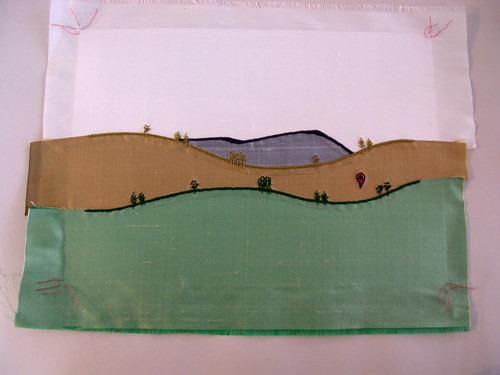
Secondly, the methodology I used for the silk covers last year turned out to be horribly, painfully time-consuming. I translated my “design” into blocks of colour, cut the right shapes out from appropriately coloured dupion silk, bonded them together and then sewed over the joins with embroidery. A very time-consuming process. The embroidery alone took 16 hours per cover. Beautifully as they came out, I cannot go through that again! So now I’m looking at the possibility of screenprinting, or maybe just doing a simpler embroidered design. This is going to require some serious and careful thought as it will have a big impact on the cover design. (You’ll be glad to hear that I’m not going to be doing the design myself this time!)

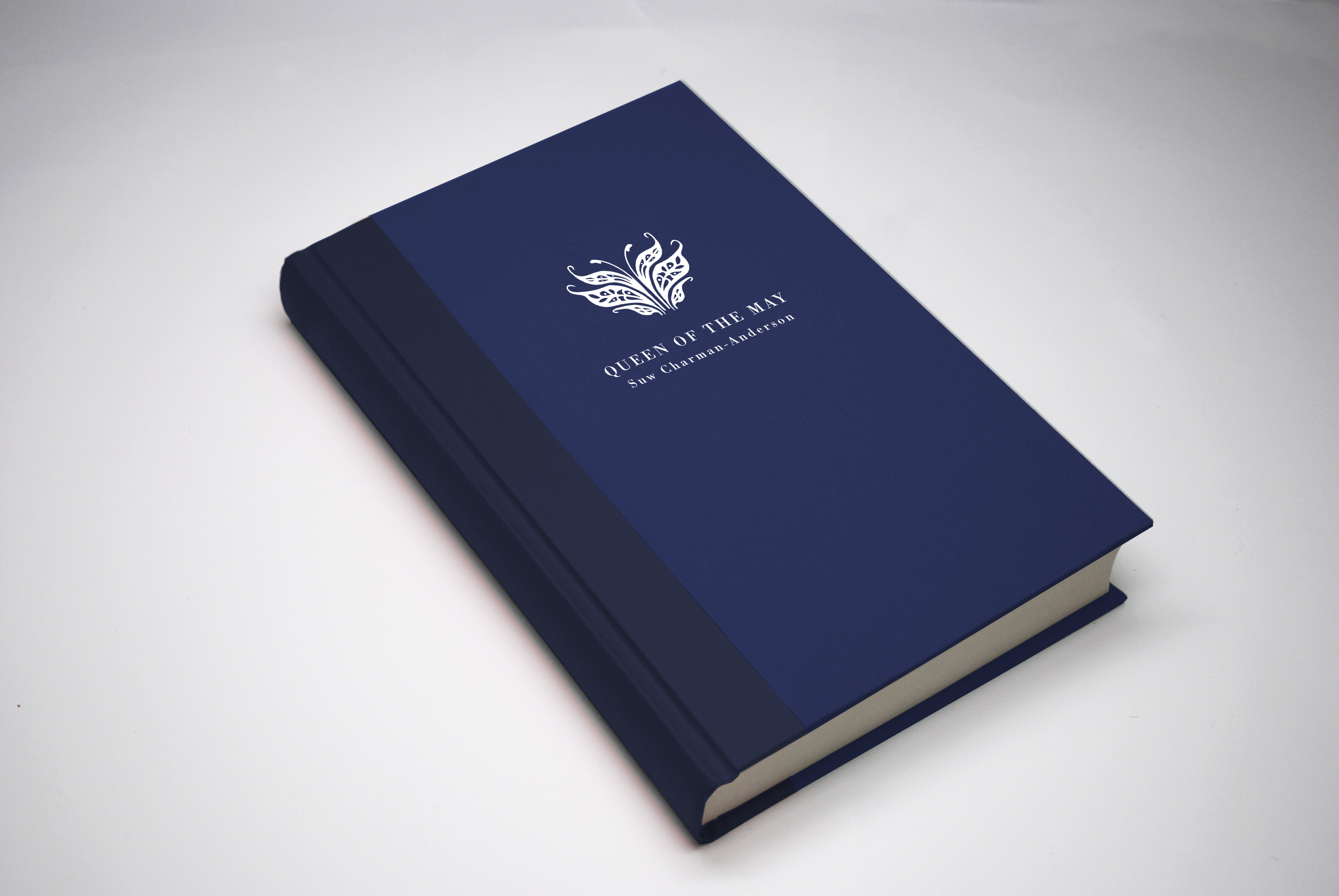
I’m also looking into possibilities for a leather-bound version. I’m talking to a number of binderies about my options, both for them to provide the binding service, and to explore whether there is any way that I can work on the leather bindings myself, under supervision. Whilst I worked with leather in my second Falkiners course, I have neither the equipment or the experience to do the leather versions myself. BInding in leather, even if it’s just an A6 novelette, is going to be far from cheap, but the results will be stunning.

Soon, I’ll have my costings nailed down and then I’ll be in the right position to start my next Kickstarter project. I have had a few ideas for exclusive rewards that I’ll be listing, but their numbers will be very limited indeed. I’ll be announcing the project through my mailing list first so if you want to be amongst the first people to know when it goes live, join the mailing list now! I send out very few emails and I manage the list using Mailchimp so you can set your preferences for type of email and can unsubscribe at any time without any risk of your email address winding up in the wrong hands.

I’m very excited to be planning my second Kickstarter project. It’s been 18 months since I put Argleton up, and the Kickstarter community has expanded dramatically over that time, so I’m eager to see what sort of support it’s possible to get now. My goal will certainly have to be a bit higher than last time in order to pay for a designer and my time: If writing is to be sustainable, it has to provide me with a modest living, and I would be very happy indeed if it could do that independent of the behemoth that is Amazon.

In the meantime, though, there’s only so long I can put off doing that edit!

{ 0 comments }